
Understanding Dementia: Types, Symptoms, and What Families Should Know
What Is Dementia?
Dementia is not a single disease. It’s an umbrella term used to describe changes in memory, thinking, and daily functioning. Many families first being searching for information after noticing early signs of dementia, such as memory changes, confusion, personality changes, or difficulty completing familiar tasks.
While some forgetfulness can be a normal part of aging, dementia goes beyond occasional memory lapses. It affects a person’s ability to function, make decisions, and live safely without support.
If you have questions about a loved one, or would like to discuss our services, you may consult with our Licensed Clinical Social Worker (LCSW) and Certified Dementia Care Specialist (CDCS), Natasha Hilts by clicking below.
We provide dementia-informed support services in Okaloosa and Walton County, Florida. Remote consultations available in Pennsylvania.
For more information about services with Sunset Senior Concierge, visit our homepage.
Healthy Aging vs. Dementia
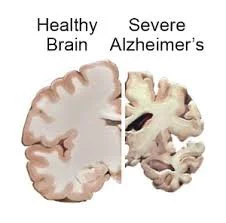
Brain scan comparing a healthy brain vs. someone with severe Alzheimer’s-source National Institute on Aging.
Healthy Aging vs. Dementia:
What’s the Difference?
Healthy Aging May Look Like:
Occasionally forgetting names or appointments, but remembering later
Misplacing items from time to time
Slower processing or needing more time to learn new things
Forgetting why you entered a room
Forgetting the password to a website, or a former classmate’s name
Dementia May Look Like:
Repeatedly forgetting recently learned information
Getting lost in familiar places or on similar driving routes
Difficulty managing finances or medications
Changes in judgment, personality, or behavior
Struggling with familiar tasks (cooking, driving, household chores)
If changes begin to interfere with daily life, it’s time to look deeper.
It’s common for families to wonder,
“Is this just aging, or early signs of dementia?”
If you’re noticing changes or feeling unsure where to start, you don’t have to figure this out alone.
When Your Loved One Doesn’t Recognize Something is Wrong
One of the most frustrating and confusing experiences for families can occur when a loved one’s perception of their abilities or recent events no longer matches what others are observing.
Early on, this may be subtle. A parent might insist they already paid a bill or took their medication when they haven’t, question whether you told them about an appointment, believe someone else misplaced an item they moved themselves, or become frustrated when family members express concerns about driving, finances, or other everyday tasks.
These situations can sometimes feel like dishonesty. However, changes in memory and other cognitive abilities can affect how a person understands or reconstructs what happened. Some people also experience anosognosia, a neurological symptom that limits their ability to recognize their own cognitive impairment. To the person experiencing it, their perception may feel completely accurate.
This distinction can be important for caregivers. Repeatedly correcting, confronting, or trying to prove that a loved one is wrong may increase frustration without creating greater awareness. When cognitive changes are affecting safety or independence, the focus can instead shift toward identifying what is happening, putting appropriate supports in place, and preserving the person’s dignity and autonomy whenever possible.
Common Misconceptions About Dementia
Myths vs. Facts
Debunking Common Myths About Dementia
Myth: Alzheimer’s Disease and Dementia are the same thing.
Fact: Dementia is an umbrella term for many subtypes of diseases, with Alzheimer’s Disease being one of over 100.
Myth: I will develop Dementia if my parent had it.
Fact: Chances are higher for developing Alzheimer’s Disease if certain genetic variants are present, however, lifestyle and other environmental factors may play a higher role in the formation of other dementias.
Myth: Dementia is an inevitable part of aging.
Fact: Dementia is not a normal part of aging. It’s caused by diseases of the brain, such as Alzheimer’s or vascular dementia.
Myth: Dementia only impacts memory.
Fact: Dementia can also impact thought process, mood, movement, and behavior.
Myth: Dementia only impacts older people.
Fact: There are types of dementia that impact younger people as early as their 40’s and 50’s, such as frontotemporal dementia and young onset dementia-early diagnosis is key!
Types of Dementia
Dementia is an umbrella term that describes a range of symptoms that are caused by disorders affecting the brain. It is not one specific disease. There are over 100 subtypes and each present differently. Dementia impacts thinking, behavior, motor skills, and the ability to perform everyday tasks.
The most common form of dementia is Alzheimer’s Disease.

Alzheimer’s Disease
Mild Cognitive Impairment
Frontotemporal
Vascular
Mixed
Lewy Body
Subtypes of Dementia
Alzheimer’s Disease (Most Common)
Etiology
Plaques and tangles in the brain
Gradual progression
Short-term memory → language impairment → loss of executive function (responsible for judgment, reasoning, and everyday tasks)
Hallmark presentations
Progressive memory decline*
Difficulty with orientation and time
Agitation
Sundowning
Lewy Body Dementia
Etiology
Abnormal protein deposits (lewy bodies) in the brain
Progressive neurodegenerative
Early stage (1-3, cognition or REM disorder/acting out in sleep) → mild to moderate stage (4-5, hallucinations and parkinsonism tremors) → late stage (6 -7, severe decline in memory, mobility, and communication
Hallmark presentations
Hallucinations*
Anxiety, depression, delusions
Fluctuations in attention/alertness
Motor rigidity (Parkinsonism)
Vascular Dementia
Etiology
Typically following a stroke, mini stroke (TIA), or vascular disease
“Stepped” decline in cognition
Acute, sudden after cerebral even → stabilize → worsen again after subsequent events or disease progression
Hallmark presentations
Prominent apathy (lack of interest)
Slowed thought processing
Behavioral issues (disinhibition, emotional outbursts)*
Frontotemporal Dementia (FTD)
Etiology
Abnormal protein deposits (Tau, TDP-43) resulting in swollen neurons
Marked atrophy in the frontal and temporal lobes found on imaging
Progression is variable per individual-significant inappropriate social behavior, while memory is often spared
Hallmark presentations
Compulsivity/Impulsivity*
Disinhibition
Changes in eating habits (overeating or marked increase in eating sweets)
Loss of empathy
Emerging Research: “Type 3 Diabetes”
Some research suggests a link between insulin resistance and cognitive decline, sometimes referred to as “Type 3 diabetes.”
May be associated with Alzheimer’s disease
Focus on brain insulin signaling and glucose metabolism
Lifestyle factors like blood sugar regulation may play a role in prevention and progression
Research is ongoing, but this highlights the connection between metabolic health and brain health.
Mild Cognitive Impairment (MCI)
Key causes can be primarily age-related brain changes, or may result from medications, head injury, Alzheimer’s-related brain plaques/tangles, vascular damage, chronic stress, or vitamin deficiencies.
Noticeable cognitive changes, but still functioning independently (may require some assistance with IADLs/executive function tasks)
May or may not progress to dementia
Important stage for monitoring and early support
Questions to Ask a Doctor

It’s helpful to take notes in your appointment.
Below are a list of questions to ask a doctor if a loved one has been diagnosed with dementia.
What type of dementia is suspected?
What stage are they in?
What level of supervision is needed?
4.What safety concerns should we be aware of?
5. What support services should we consider now vs. later?
6.What developmental age of functioning are they currently operating at?
#6 is one of the most helpful questions to ask, as this puts some behaviors into perspective.
Families often want to honor independence, but safety matters first.
Warning signs may include:
Wandering or getting lost
Medication mismanagement
Falls or mobility issues
Unsafe cooking or driving
Increased confusion or agitation
When Staying at Home May No Longer Be Safe
Warning signs are signals that we should take a deeper look to see if there are logistical, supportive measures that can help a family member remain at home safely for longer. The harsh consideration is: even with adjustments, is safety still a concern?
If you have adapted the home with door alarms, medication dispensers, hand rails or durable medical equipment, included a meal delivery service, maybe even hired a senior concierge service to assist with professional support, such as care coordination or transportation, while you are unavailable. If there are still causes for concern, you may need to consider a higher level of care.
Caregiving Reality:
What Families Should Know
Caring for a loved one with dementia is deeply meaningful, but, it is also physically and emotionally demanding.
Without support, caregivers often experience:
Burnout
Chronic stress
Health decline
Emotional exhaustion
Support is not a luxury, it’s what makes sustainable care possible.
Sleep Deprivation: Roughly half of caregivers report having trouble sleeping at least once a week.
Depression/Anxiety: Studies show 20–60% of caregivers experience depression.
Isolation: 40% report their social life has worsened, and 66% find it difficult to find support services.
-Alzheimer’s Association

How Sunset Senior Concierge
Can Help
We support families navigating dementia with:
Care management, coordination, & planning
Transportation and appointment support
Dementia-informed assistance
Health communication between providers and back to families
Ongoing guidance as needs evolve
We help families create a plan that supports both the individual and caregiver.
If you’re noticing changes or feeling unsure where to start, you don’t have to figure this out alone. The earlier you have a plan, the more options you have.
Click below to schedule a consultation, explore our homepage, or learn more about our dementia, geriatric care management & senior concierge services.